News

Boat Detailing and Maintenance Tips – Summer 2022 Edition

For most boat owners, their boat is one of their most prized possessions, and it’s no secret that boats aren’t a cheap investment. If you love something, spent a fair amount of money on it, and want it to last, it’s important to invest in the maintenance of that item. By taking a few simple steps throughout your boat’s life, you can get more time with it, make more memories, and spend less time dealing with issues. We’ll dive into everything you need to know about keeping your boat in the best condition possible.
Clean and Detail Your Boat’s Exterior

We all love when our boat has that extra shine factor but keeping the exterior clean is about much more than a subtle sparkle. By ensuring your boat is cleaned well during boating season and in the off-season, you can protect your boat from harmful debris or scratches. Even something as simple as leftover salt from saltwater can cause scratches, slowly causing your boat’s finish to deteriorate.
Boat soap, microfiber cloths, and some fresh water every few weeks can go a long way in keeping your entire boat clean.
You should also invest in a basic detailing service every 6-12 months to ensure long-term protection and reduce grime. Find a detailer you trust or invest in the right detailing tools and do it yourself! The detailing process really isn't that overwhelming once you have the basics down.
To help get you started, here are ten products we recommend for every beginner boat detailing kit.
If you’re still not convinced, remember that a dirty hull can increase fuel costs by as much as 30%, so there are true financial savings to be found in regular maintenance! Be sure to rinse with clean water and dry your boat every time you pull it out of the water. Wiping down vinyl seats, spot cleaning fabrics, and regularly waxing and polishing your boat will prevent stubborn stains from damaging the gel coat.
Check Your Engine
Don’t let the idea of “engine maintenance” sound too overwhelming; there are many simple maintenance activities that any person can do. Before every trip, double-check that the fuel tank is filled with fuel and that its vent is open, ensure that your engine screw clamps are still tight, and check your propeller for any debris.
After you pull your boat out of the water, flush the motor to get out any unwanted materials like sand. This can easily be done with a motor flushing attachment and a garden hose, so you don’t need anything fancy.
Overall, just keep an eye out for anything that is out of the ordinary. Be sure to replace your spark plugs as needed, check your engine’s oil level, watch for cracks in the fuel lines, keep an eye out for rust, and replace parts as needed. When in doubt, take your boat to a mechanic.
Protect Your Boat with Proper Storage

As sad as it is to put your boat away after each season on the water, storing it properly plays a huge role in the overall health of the boat. Whether you store your boat indoors or outdoors, take the necessary steps to keep snow, rain, ice, and other debris from getting into or on your boat. It’s best to cover your boat if possible while still ensuring it has airflow to avoid getting mildew while it’s not in use. While it might take a bit more time to store a boat properly, it will save you a lot of time in the long run.
Taking Care of Your Boat Slows Down Time

Everyone loves making summer memories out on the water, but it always seems like time goes too fast. In order to slow down summer for your loved ones, invest the time in caring for your boat so it lasts longer, requires less maintenance time when it should be on the water, and allows you to be carefree while you’re enjoying your days in the sun.

How to Recaulk A Boat
Boat detailers are often asked to help with every detail in and on a boat, including caulking. Caulking can sometimes turn gray or yellow with wear and tear, or simply wear down over time, needing a replacement job. It’s important to know how to properly replace caulking while protecting other surfaces on the boat.
What is Caulking?

Caulking uses a product called “caulk” to seal the joints of different components on a boat, making these areas free from air leaks and water penetration. Caulking is the perfect way to finish tight seams in boats that are commonly getting wet or experiencing high foot traffic.
What Tools and Products Do I Need to Redo the Caulking on a Boat?

This process requires a set of simple tools, many of which you may already have. To remove current caulking, you can use a caulk removal tool like a putty knife or a flathead screwdriver. A putty knife may not be enough for areas with more wear and tear so you may also need a razor blade to get difficult caulk up. Then, once you’re ready to apply new caulk, use blue tape to tape the edges, caulk, a caulking gun, and a finishing tool that removes any excess product once you’re done. You will also need gloves and extra towels or rags to keep your workspace clean.
How Do I Remove Caulking?

Properly removing the current caulk on a boat can be a tedious process, but with some patience, elbow grease, and the proper tools, it shouldn’t be too difficult. You can get caulk remover tools that are specifically designed to dig down below the caulk and pull it up from small spaces.
Sometimes, the caulk will be a bit too hard and can actually break these tools, so you might have to carefully take a razor blade along the edges to loosen the caulking. You can also use a flathead screwdriver in some cases to remove the caulk. Lastly, once it’s all removed, take a Shop-Vac to pull up any leftover debris before you get started on the next step.
How Do I Properly Tape the Seams?

It’s important to keep the caulk exactly where you want it because when it hardens, it can be difficult to remove. To keep the gel coat clean, take some blue tape and place it carefully along the edge of the crevice where the caulk is going to go. You want to secure the tape in its place right before the edges begin to curl down into the crevice. You can use the sun as a compass; right where the glare stops shining on the boat, place the tape down. Do this on both sides of the caulking area.
How Do I Properly Apply the Caulk Line?

Once you have gloves on, distribute an even bead of caulk throughout the area you’re treating. You’ll notice that the caulking looks very messy after the first pass, but using the angular caulk-evening tool, you can make the lines clean and even. Sometimes, you might notice that some of the deck seams have more caulking than others, so don’t hesitate to transport the excess caulking to areas that may not have enough.
How Do I Make Sure the Finish is Clean and Precise?

The tape and the tool used to make the caulking even are going to be the two biggest tools for ensuring a clean seam. They help keep the caulking in a designated area as well as help smooth out any bumps or imperfections after the bead of caulking is initially added.
Final Thoughts
Recaulking seams is a simple, yet detail-oriented task. It requires a steady hand and some patience, but with the proper tools and knowledge, you’ll be able to replace the caulking on any boat!
Learn how to recaulk seams by watching the video below!

Starke Yacht Care Level-R or Restructure?
When it comes to boat detailing, the number of products available can be overwhelming. It can be difficult to know when to use what, as well as to understand the advantages and disadvantages of every product. When it comes to heavy cut compounds, Level-R and Restructure are two great products from Starke.
We conducted a test to see which of the two products works the best, and we discovered that it’s less about which product works best and more about determining which product works best for certain circumstances. Restructure and Level-R are both compounds you should have on hand; many people rush to buy Level-R and forget about Restructure, but in our experience, they’re both of value for different reasons.
What are Heavy Cut Compounds?

Boats go through a lot of weathering when they’re used; they may be exposed to salt, dirt, pollution in the water, and even sun damage. All of these things are hard on the surface of the boat, taking away the shine and even producing deep scratches. Heavy cut compounds are great for removing those scratches and bringing a shiny finish back to a boat, so it looks its best out on the water. Removing oxidation and other forms of damage with a heavy cut compound will keep your boat in the best shape possible, making it last through the years.
What is Level-R?

Level-R can be considered a “heavy duty” heavy cut compound. It is great for removing deep marks and scratches from sand, salt, and other debris. This is often the go-to product for many marine detailers because they know they can count on it to get the job done.
When it Should be Used
Great for situations in which a lot of damage has been done to the gel coating of a boat, Level-R will remove scratches with no problem. It’s also great to use after wet sanding to even out any of the scratches left over from the sander.
Pros of Level-R
Level-R is dependable and boat owners know it will get the job done. It doesn’t require too much “elbow grease” because it cuts really beautifully with slow and steady pressure from the machine.
Cons of Level-R
Level-R is a hard product to work with in the hot sun because it dries up quickly. Since most marine detailers work outside, this product can be tricky to optimize. Keeping the surface wet with a spray bottle will help the product last a bit longer, but it doesn’t go as far as its counterpart, Restructure.
What is Restructure?

Another heavy cut compound from Starke, Restructure is a bit lighter than Level-R but surprisingly effective at removing oxidation and scratches. When we used this product on a test panel, it was able to provide a much smoother finish than expected, though still not quite as smooth as Level-R.
When it Should be Used
If the damage is moderate, Restructure is a great heavy cut compound. It’s a bit more wet than Level-R, so it does well in hot environments and the product goes further. Since the product doesn’t dry out as fast, it’s easier to get more working time with it, leading to better results than anticipated.
Pros of Restructure
The product will go a long way and give users more bang for their buck, while also being incredibly effective at removing moderate scratches and damage marks.
Cons of Restructure
It doesn’t have the same cutting power as Level-R, so for deep scratches or intense damage, Restructure may not be able to deliver pristine results.
Comparing Results

As we said, you should have both Level-R and Restructure on hand if possible. However, if a store is out of Level-R, subbing in some Restructure isn’t a bad idea. Since Restructure stays wetter longer, the product gives you more working time to get out the scratches in a gel coat. Both have a time and a place which is why it’s best to have both products at your disposal.

Koch Chemie MAGIC Wheel Cleaner Review
Keeping your vehicle in tip-top shape is critical to the life of that vehicle. Wheel care is often overlooked, but wheels get just as dirty, if not dirtier than the rest of your car. They go through all the mud, muck, and dirt on the road all the time, so be sure to show them some love. Using Koch Chemic Magic Wheel Cleaner will change your life; you’ll no longer need hours scrubbing or a pressure washer to make your wheel shine. It truly is magic.
What are Wheel Cleaners?

Wheel cleaners help eat through the iron and dirt on the metal parts of a vehicle’s wheel. Of course, there are many different brands to choose from, but we can’t speak highly enough about Koch’s product.
What type of wheels and rims can you use Koch Chemie Magic Wheel Cleaner on?

Koch Chemie Magic Wheel Cleaner is safe to use on most wheel types including painted alloy rims, chrome wheels, and steel rims. For most vehicles today, you can feel good using this product, knowing that it won’t damage your wheels or be incompatible.
Quick Tip
Taking a moment to test a small patch on an inconspicuous area of the wheel is always a good idea. This will help ensure that the product is compatible with your wheel before covering an entire wheel in it.
How to apply Koch Chemie Magic Wheel Cleaner

Another reason to love this product is that the application is so simple that anyone can do it correctly. All you need to do is generously cover the metal part of your wheel in the Koch Chemie Magic Wheel Cleaner, wait 2-5 minutes, and spray off. You’ll notice that over those 2-5 minutes, the wheel cleaner changes from a clear liquid to a bit of a darker color. It’s as if you can actively see if eat up any brake dust and road grime right before your eyes.
Once 5 minutes have elapsed, grab a garden hose and spray the product off. If you have a pressure washer, you’ll get even more impressive results, but a normal hose will do the job. You may want to get close to the wheel and put your finger on the hose hole to ensure maximum pressure is hitting your wheel.
What makes this product stand out?

This product is a standout on the market because it’s so easy! It doesn’t require any hard work and makes it almost fun to wash your vehicle’s wheels. With just a bottle of Koch Chemie Magic Wheel Cleaner and a hose, you can seriously up-level your car cleaning routine. This product is also great because it has a small spray head, meaning it’s easy to get to harder-to-reach spots on your wheel, giving you the most thorough clean possible.

How to Polish and Coat Glass
Properly coated glass is important in every boat; it’s not just about the shine, but glass coating serves a couple of functional purposes as well. First, glass coating makes the surface of the glass hydrophobic, meaning that it repels water and makes your glass easier to maintain. Secondly, the hydrophobic properties make it easier to see when boating through rainy conditions. This isn’t a step you want to skip as it contributes to the safety and longevity of your boat. Let’s dive in!
How do I Polish and Coat Glass?

For the most part, polishing and coating glass requires a bit of patience and elbow grease. Sure, you’ll need a random orbital machine to polish, but all the other steps require simple products and techniques. You’ll start off by washing and decontaminating the glass surface, then move into polishing, before finishing with a gel coat.
Tools Required
If you are working on a client’s boat or trying to do this on your own at home, here are the tools you’ll need: a rotary machine, Starke Yacht Care Glass Polish, Lake Country HDO Pads, Venom Water Spot Remover, Starke Yacht Care Surface Prep Alcohol Spray, a microsuede applicator sponge, a standard microfiber, and THOR Marine Nano Ceramic Coating. There are other brands of these products, but for the best results, we recommend the brands listed.
How to Decontaminate a Hull
Decontaminating a hull is simple and necessary. All the water spots, residue, and dirt should be removed from the glass prior to treatment, which is why decontaminating is so important. With a little bit of Venom Water Spot Remover and a microfiber cloth, you can simply apply a bit of the Venom Remover to the cloth and wipe down the glass surface. Let it sit for 3-5 minutes before rinsing the excess off and drying the glass.
Applying Starke Yacht Care Crystal Clear Glass Polish

To polish, you’ll need your rotary machine paired with the Lake Country HDO Pad. Apply the Starke Yacht Care Class Polish by spraying it directly on the glass, then use the rotary to work the product into the glass. There are some abrasive properties to the polish, so it’ll work out any small scratches or imperfections in the glass. If there is any residue left after polishing, you can simply wipe it off with a microfiber cloth.
How to Use Surface Prep
To prep your boat glass to be coated, spray Surface Prep on the surface, wipe the product off, and ensure no residue is left behind. Now, you’re ready to apply the Thor Ceramic Coating!
Applying Liquid Thor Ceramic Coating

Thor Coating is great for glass because it won’t leave a thick film on the glass and is a bit more flexible. You’ll get the great hydrophobic properties you’re looking for without being thick and difficult to remove.
Apply the Thor liquid to the applicator sponge and use long, even strokes on the glass to get the best results. Be sure to cover every inch of the glass and leave the product in place for 3-5 minutes. After letting it sit, use two clean microfiber towels to wipe off the excess. Do the first pass with one towel and a second pass with another. Remember to use gloves for this process so you don’t get any of the oils or products on your hands.
Glass Coating is a Must
You want to maintain your boat and make it easier to clean, but you also want to be sure you’re safe in any weather conditions. Sometimes storms on the water can come as a surprise, but with proper care and glass coating, you’ll have the best visibility possible in the wettest of conditions.

Easy Two-Step Correction That Will Save You Time and Money!
When a boat starts to lose its shine, many people think of one solution: a wax! However, if you wax a boat without cleaning the hull, all you’ll be doing is trapping in dirt and grime under a layer of was. To revive the sparkle you’re aiming for, we recommend doing a two-step correction that includes the proper cleaning steps before waxing.
Benefits of a Wash and Wax
Giving the boat a proper wash before waxing will get all the dirt and grime up before placing a layer of wax on top. Without the wash, everything that makes your boat lose its shine in the first place will still be there, essentially getting sealed onto your boat. Not only will this lead to a less than satisfying outcome, but trapping salt, sand, and whatever else under a layer of sealant -- in this case, wax – can damage and scratch your boat over a long period of time.
Products Needed for a Two-Step Correction
To properly show your boat the love it needs when doing a two-step correction, you’ll need the following products:
- Rupes Big Foot Random Orbital Polisher
- Lake Country HDO Pad
- Lake Country CCS Pad
- Starke Yacht Care Venom Water Spot Remover
- Starke Yacht Care Elevate Medium Cut Compound
- Starke Yacht Care Hyper Hold Polymer Boat Sealant
- Standard 18'' x 18'' microfiber
- Starke Yacht Care Hyper Hold Polymer Boat Sealant
Below we’ll dive into when to use each product.
How to Decontaminate a Hull
Using Venom and a microfiber cloth or mitt, you can get all the sand, salt, and water spots off your boat before moving further in the process. This step is incredibly simple; apply the Venom Spot Remover to your microfiber cloth and start wiping down the entire boat. The Venom will go pretty far, so you should be able to do nearly an entire side of the hull without needing more product. Once applied, let it sit for 3-5 minutes before rinsing it off completely. Let it dry before applying a finishing compound; you may need to use a cloth to dry some areas.
An important note when using Venom: it does have acid in it so it’s not meant for boats with any sort of mirrored glass because it will strip the tint off. This is listed on the product’s label as well.
How to Apply a Finishing Compound

Once the hull is decontaminated and dry, you’ll need the orbital polisher, a Lake Country HDO pad, and Elevate medium cut compound to complete the next step. Elevate is a finishing compound so it does a great job at getting out any small scratches while also providing some extra life to the surface of the hull.
Put a healthy amount of Elevate on the pad and let the machine do its job. You want to let it rotate naturally without an angled pressure applied, or you won’t get the intended results. Keep the polisher at around a 3 while you’re applying the finishing compound, finish the step in sections, and wipe each completed section down once you’re done.
How to Apply a Sealant

Next, pair the CCS pad with Hyper Hold sealant by filling the dots on the pad with the sealant. Run the machine at a steady pace across the entire hull. The sealant will be distributed evenly due to the holes on the pad.
How to Remove Sealant
When the sealant has been applied, you’ll need to remove the excess afterward. You can do this part by hand using a microfiber cloth, but you can also attach a cloth to the polisher and the job will get done a bit faster.
Conclusion
If you’re a boat owner a shop agrees to wax your boat without washing it, they’re doing you a disservice. If the boat isn’t clean before the wax is applied, dirt and grime will get trapped under the sealant, making it very difficult to get the shine you’re looking for. With the easy two-step correction, you’ll get your boat looking good as new!
Watch the step-by-step process in the video below!

What is Starke Yacht Care Ignition Finishing Polish?
The polishing step is the last component of many boat detailing jobs and it acts as the perfect finish to a job – no pun intended. After removing oxidation and getting out scratches, finishing polish helps take the boat to the next level by getting rid of swirls or small imperfections left over by the previous steps. To properly complete this last step, it’s important that you’re using the best polishes, and we have come to learn that Starke Yacht Care Ignition Finishing Polish is the best on the market.
What are Finishing Polishes?

Finishing polishes used in the polishing step are not meant to cut very much, so they usually have a low grade of cut. Their purpose is to polish and bring out the shine, so they offset of low grade of cut with a high amount of polish. These polishes can remove light oxidation, leftover swirls, and some minor imperfections, but are usually meant to be used after the other detailing steps are complete.
Why Use a Finishing Polish?

Polishes used at different steps in a detailing job will have different amounts of “cut,” meaning they are good to use for getting a certain level of imperfections out. For more intense imperfections, you’ll need a higher cut polish, and for smaller or less-deep imperfections, you won’t need as much cut. Finishing polishes, used as a last step, do not have very strong cutting power and are more for creating the smooth shine that every boat owner is looking for.
What Makes Starke Yacht Care Ignition Stand Out?

Ignition combines a light compound and a finishing polish together, so it’s more like a 2-in-1 polish. Its advanced synthetic abrasive technology allows you to remove imperfections and polish at the same time. You’ll get that swirl-free finish nearly every time, and maybe with a step or two less than you would with a different finishing polish. Additionally, Ignition can be used with a variety of foam pads or finishing pads, not just one specific type.
How to Apply Starke Yacht Care Ignition

Applying Ignition will be much like the Triple P application process, you can use a polishing pad to slowly work in the polish to the vessel. Once you are satisfied with the shine and all the imperfections are gone, you can wipe away any remaining ignition residue from the boat, and it’ll be ready to glimmer as you or your customer catches the big one! Ignition is a little different since it can be used with a range of pads, offering a bit more flexibility to the job.
Save Time, Buy the Best
Every boat owner, and boat detailer for that matter, wants to trade in time in the shop for time on the water, and it’s products like Starke Yacht Care Ignition that make that a reality. This product is the best of its kind, can save you time because it is such high quality, and will leave behind the best shine. Our team has used so many products in this industry, and we’ve tested Ignition next to some of its competitors, and Ignition blows every single one out of the water.
Learn how I apply Ignition in my video below!

Why is My Gel Coat Oxidizing So Fast?
Every boat owner will agree that the least fun part of owning a boat is the maintenance. After a long weekend on the water, enjoying the sun, no one wants to think about soap, scrubbing, polishing, or anything of that sort, but it’s important. Being the shiniest boat on the water doesn’t happen overnight, but it’s not all that much work if you maintain and treat your boat properly when it’s out of the water. Keeping in mind a few key components will make keeping that shine a breeze!
Are You Using the Right Products?

With so many household cleaners in the garage, it’s easy to think you can skip the boat-specific products and use what you have on hand, such as dish soap, to clean your boat. However, dish soap and other household cleaners usually contain ingredients that will cut through the wax on your boat and cause oxidation long-term, so using a low-PH boat soap is key. Along with the boat soap, be sure you’re using a microfiber rag to wash off any stains or marks. Leave the abrasive sponges out of this!
Are You Compounding or Polishing Before Waxing?

While it would be awesome if we could all get away with a quick boat wax solving all of our oxidation problems, that’s not the case. Even the best wax in the world can’t stop oxidation forever, you need to compound or polish your boat before waxing, at least a few times each year. Compounding and polishing will help maintain the wax finish longer and keep your boat looking new.
Are You Keeping an Eye on New Stains?
Take a look at your boat after every trip to the water to rub off any easy stains and keep it fresh. Remember, maintaining is much easier than trying to solve a problem that has been left alone too long. If you rewax after each trip, you can prevent oxidation from setting in.
Are You Storing Your Boat Properly?
The main thing that damages your boat is the sun; its harmful UV rays can eat through the wax and protectants on the vessel and cause oxidation to occur. When you’re not on the water, keep your boat covered or in a covered and shaded area to help keep it looking its best. Just like you, after a long day in the sun, your boat needs to get out of the sun and recover.
Are You Rinsing Your Boat Off After Boat Trips?

Every. Single. Time. No, not every third time or every few weeks; your boat needs a freshwater rinse every time it leaves the water. This rinse will keep saltwater from crystalizing and becoming stuck to your boat, eager to scratch and cause oxidation.
Brave the Waves, Brave the Wash
Life is never all work and no play, and neither is boating. Keeping your boat looking fresh, clean, and undamaged is the best practice, and it really doesn’t take too much work. By just incorporating a few simple steps into your boating routine, you’ll be the shiniest vessel out there for years to come!
Learn how to restore gel coat in the video below!

Using Test Spots to Land Detailing Jobs
Oftentimes, oxidation of a boat happens slowly over time, and the boat owner barely notices the gradual color changes that are caused by the buildup. Then, when they realize the oxidation has gotten to a point where their boat needs to be detailed, they are faced with the sticker shock of getting their entire boat detailed. At first, it’s not uncommon to see customers back out of a detailing job because they don’t really realize how bad the oxidation has gotten. We recommend offering a free test spot to that customer in order to show them the difference detailing can make.
What are Test Spots?

Test spots are small patches on a boat that get detailed to show the customer the stark difference in what the vessel will look like after treatment. Many customers hear words like “compounded,” “polished,” or “forced rotation,” and they can’t visualize what it actually means. Conducting a test spot for free doesn’t cost the customer anything, but it will show them how badly their boat needs to be detailed.
What Products Should I Use?
For a test spot, you’ll be going through all the detailing steps, but in a very small area of the boat. It is important to note every boats condition is different. The steps you do on one boat won’t be the same as the next. That is why we do a test spot, to see what will work best. You’ll need all the products you would use for a detailing job. Since you’ll likely be meeting the customer somewhere outside your shop, use a flex rotary polisher for all the steps, cordless if possible. Then, as you walk through each step of wet-sanding, applying heavy-cut compound, and applying medium-cut compound, we’ll walk you through the necessary products. First, make a square with some tape; you want this to be large enough so the customer can visibly see the difference between the treated and untreated areas. Next, you’ll jump into the fun stuff!
Wet-Sanding a Test Spot

Take a 1,000 abralon disc and attach it to the flex rotary polisher. Be sure to use a little bit of water to wet the surface area that you’ll be sanding, then keep the polisher on a slow, steady speed. After this is complete, wipe the surface dry, and get ready for the next step.
Applying a Heavy-Cut Compound
Secure a wool heavy cutting pad to the polisher, add some heavy-cut compound to the pad, and begin working that into the boat. You’ll want to stay slow and steady here as well. After this step, you should see a major difference in the test patch compared with the rest of the boat, but we’ll go through the remaining steps to really wow the customer.
Applying a Medium-Cut Compound
Last, use the wool cutting pad to apply elevate medium cut compound to make the test spot shine. You don’t need to do much more after this, as this will usually get your customer’s attention and show enough gloss and color change to entice the buyer.
Closing the Sale
Test spots are powerful tools for detailers; you’ll find that showing often works better than telling a customer what you can do for them. By illustrating the stark contrast in the before and after view, you provide an illustration of how valuable your skills are. Additionally, doing a test spot for free is a great way to showcase your skills and customer-centric service; this will make you stand out from competitors!
Watch the step-by-step process below!

How to Remove Decals from Gel Coat
Boats usually have some sort of decal on them; whether it’s the name of the boat, the brand of the boat, or even just a custom detail added to the boat, it’s very common to have to work with or around decals, unless of course, they’re being taken off. Taking off decals is an important skill as a detailer, and it’s not nearly as intimidating as you may think. We’ll break it all down for you!
What do I Need to Remove a Decal?
Your supply list for removing boat decals is fairly short. All you’ll need is a plastic razor blade, a regular drill, a 3M eraser wheel, wet sanding supplies, and any supplies you may want for compounding or polishing after the removal. It’s important that the plastic tool used to scrape off the decal won’t damage the gel coat, so keep that in mind.

Why Should I Remove a Boat Decal?
Apart from a customer wanting the decal removed because it doesn’t look good anymore or isn’t what they want anymore, you may have to remove a decal to detail a boat. It’s very difficult to get rotaries in between the small gaps and spacings on the decal’s letters, so if you’re doing a detailing job, it’s sometimes best to remove the decal, detail, then add a new decal on.
How Do I Remove Decals?
Removing decals is fairly simple, and with a little elbow grease, you shouldn’t have any problem being successful. There are four simple steps including wet sanding:
- Use a plastic tool to remove the decal. This part of the process will scrape off the thick decals so you can get to work removing all the leftover residue. Most tools can’t remove the decals themselves because they are usually too thick, so scraping them off is the first step.
- Use a drill eraser wheel to remove the remaining residue. The 3M eraser and drill come into play in this step. Be sure the drill is on the “drill” setting, and keep the speed at a 1 or 2, carefully working through each letter to remove all that sticky, thick residue left by the decals.
- Wipe the boat with a microfiber towel and denatured alcohol. Denatured alcohol is a great help in getting some of the more stubborn but small bits of residue left over, and it’ll help ensure the entire surface is ready for wet sanding.
- Finish with wet sanding. We have blogs about the details of wet sanding, but you’ll need a flex rotary polisher, a Mirka 6” Abralon disc, and some water to get the final bits of residue off.
Watch the step-by-step process below!
Decals Usually Leave Lasting Marks
After you have removed the decals, wet sanded the area, and even compounded or polished it, you may notice discoloration left from the decal itself. The glue on the decal can react with the gel coat to leave long-lasting discoloration. Unfortunately, there’s not much that can be done about this discoloration, so we recommend covering the area with a new decal. This is a helpful tip when discussing the realities with your customers so you can set expectations clearly.

What You Should Know Before Wetsanding a Boat
It’s not uncommon for boats to lose their shine over time. The wear and tear of the water they’re in, the transportation process used, as well as weather exposure and other variables can all cause a boat to become dull and worn. Wetsanding is a sanding technique that uses lubricated sandpaper to get rid of oxidation and bring life back to a vessel. There are a few things to keep in mind before you decide to wetsand a boat:
Understanding Wetsanding
If your boat is losing shine and a quick buffing job isn’t solving the problem, it may be time to introduce wetsanding into your process. While many people might think buffing is the route to take when a vessel gets dull, buffing will only cover up the problem, while wetsanding will fix it. Wetsanding uses a polisher with a polishing pad and proper lubricant to remove oxidation from a boat, leaving it shiny and new.
Wetsanding vs. Drysanding
Both Drysanding and Wetsanding have their benefits, but drysanding is great to level out a surface and give it an initial smoothness, while wetsanding is going to give that polished, professional look you’ll want. Many people make the mistake of skipping the wetsanding step because it’s not something you have to do, but you can almost always tell in the end if wetsanding was not done.
When Should You Wetsand?
If there’s a boat with sever oxidation and scratches and you’re trying to revive the shine it had when it first hit the water, wetsanding is the perfect way to do so. Wetsanding can remove scratches and even out the surface of the vessel while providing a shiny finish.
Recommended Grit for Wetsanding
The grit you’ll use depends on the amount of scratches and oxidation that need to be taken care of. You can start with anywhere from 600 – 1,000 grit sandpaper. For most jobs, 1,000-grit does the trick, but if there’s a lot of buildup to remove, you may need to start with a 600-grit sandpaper and work up from there.
How Do I Avoid Inconsistent Patterns?
Unwanted patterns during the wetsanding process could happen for two reasons: your technique is wrong or your materials are not the best for this process. Make sure you’re using low speeds and applying a smooth and steady pressure during the wetsanding process – don’t rush it. If you’re using cheap materials, such as the wrong machine or cheap sandpaper, your results will give you away.
How Do I Guarantee a High-Gloss Shine?

After you finish wetsanding, you’ll want to use a wool pad, rotary buffer, and a heavy or medium-cut compound to remove the fine scratches left behind. After compounding, we recommend using a finishing polish like Ignition or Triple P for the ultimate shine.
Final Thoughts
While it may feel like more of a hassle than trying to buff out oxidation, the results from wetsanding will last longer and look better. You don’t have to overcomplicate the process; make sure you invest in high-quality materials and focus on mastering your technique, and soon, you’ll appreciate wetsanding just as much as we do!

Ceramic Coatings Or Wax Sealants?
Whether you’ve practiced boat detailing for years or are just getting started, getting the most bang for your buck is likely one of the first factors you consider when browsing products. Still, with so many options available on the market, it can be difficult to narrow down the best choices amongst the crowd.
Ceramic coatings and wax sealants fall into this category, as you will soon find a diverse range of methods to help protect your boat’s surface. So, which of the two are best for your needs and — most importantly — provide the most value for their price? Keep reading to find out.
What is a Wax Sealant?

These items almost always contain natural waxes as an ingredient and, as the name suggests, act as a sealant for surfaces. Some users enjoy it for its “natural” appearance since it sits on top of paint rather than bonding to it.
The Pros
- Aesthetic: High-quality wax paint sealants can make even the plainest paint job look gorgeous thanks to their rich, deep appearance that masks imperfections and enhances colors.
- Application: These are also fairly easy to get the hang of, as the application only requires minimal equipment and can be completed fairly quickly.
The Cons
- Durability: Unfortunately, wax products are not known for being particularly durable, as high temperatures and harsh detergents can cause them to evaporate.
What are Ceramic Coatings?

A product of advanced coating chemistry, ceramic coatings are made using a combination of elements and microscale nanoparticles. The hydrophobic properties in ceramic coatings provide superior protection against natural elements like water spots, bug splatters, bird droppings, and more. As one of the more innovative detailing options out there, these products are always evolving to fill different needs — though they remain a powerful solution for simple paint protection.
The Pros
- Durability: Ceramic coatings offer an extra layer of protection that other detailing products fail to accomplish. If you want a clear, hard barrier that’ll defend your surfaces from any type of damage, this is the way to go.
- Aesthetics: Fortunately for us, ceramic coatings don’t sacrifice beauty for power. You can still expect to receive a dazzling gloss finish that improves the appearance of your paint — and keeps it that way.
The Cons
- Application: You’ll need to put in work to take advantage of all these benefits, as the application process for ceramic coating requires some skill. Some products might have specific techniques to follow, timing requirements, and more. Still, it’s more than worth the effort.
Type of Coating
There are a lot of ceramic coatings on the market right now, so it’s tough to decide which is best. We’ve tested many of these products, and the three that always impress our detailers the most are Liquid Thor, Repel Pro, and Liquid Kraken. We’ll break down some of the best features of each below.
Liquid Thor

The Liquid Thor nano-ceramic coating is one of the easiest ceramic coats to apply. It has a great work time and won’t dry out, allowing you all the time in the world to get it applied perfectly. During the application process, tons of nanoparticles and UV inhibitors will chemically bond to the surface of your boat, locking onto the gel coat, marine paint, glass, or other surfaces to offer an additional protective layer against even the harshest of elements. The water beading on exterior surfaces after applying this product makes it all worth it.
Repel Pro

Best used in areas where the finest boat surface protection is required, Repel Pro offers true 9H hardness, which will come in handy if your boat is put to the test. A guarantee is offered when using Repel Pro with marine paint, but even gel coats will enjoy 2-3x more durability than other polymer-based sealants. For even better results, consider pairing this coating with Starke Replenish Silica Spray.
Liquid Kraken
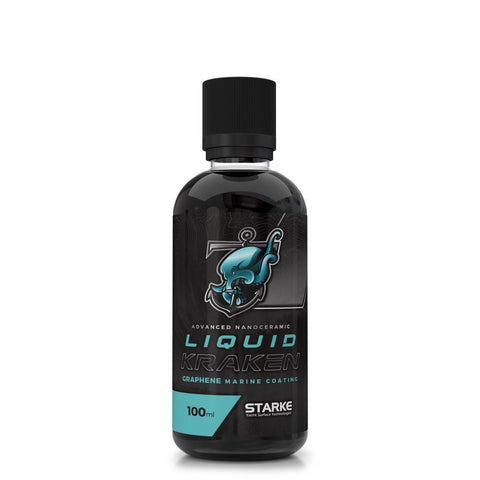
With roughly 12-24 months in between coats, we love the Liquid Kraken ceramic coating because of its longevity and hydrophobic effects. Additionally, it has a high concentration of graphene oxide, which creates an impressive layer of protection that is one atom thick. With Liquid Kraken on board, you’ll notice a reduction in water spots by about 50%, and if that doesn’t make it all worth it, then nothing will.
Interested in learning more about ceramic coatings? Check out my step-by-step tutorial!
The Consensus
Though users will have no trouble making the most out of either option, ceramic coatings hold an edge over wax sealants thanks to their unrivaled durability.
Despite coming in at a higher upfront cost, the benefits provided by ceramic coatings can’t be overlooked. You’ll enjoy easier upkeep, impressive longevity, and stronger protection against light marring and scratches compared to traditional wax sealants. Ultimately, it is the best option for detailers searching for lasting results.
Still, keep in mind that no coating is entirely scratchproof. Continue following best cleaning practices to avoid salt/sun damage and to continue getting the most value from your detailing products. Prevention and regular maintenance will offer you the most durable protection from UV damage.